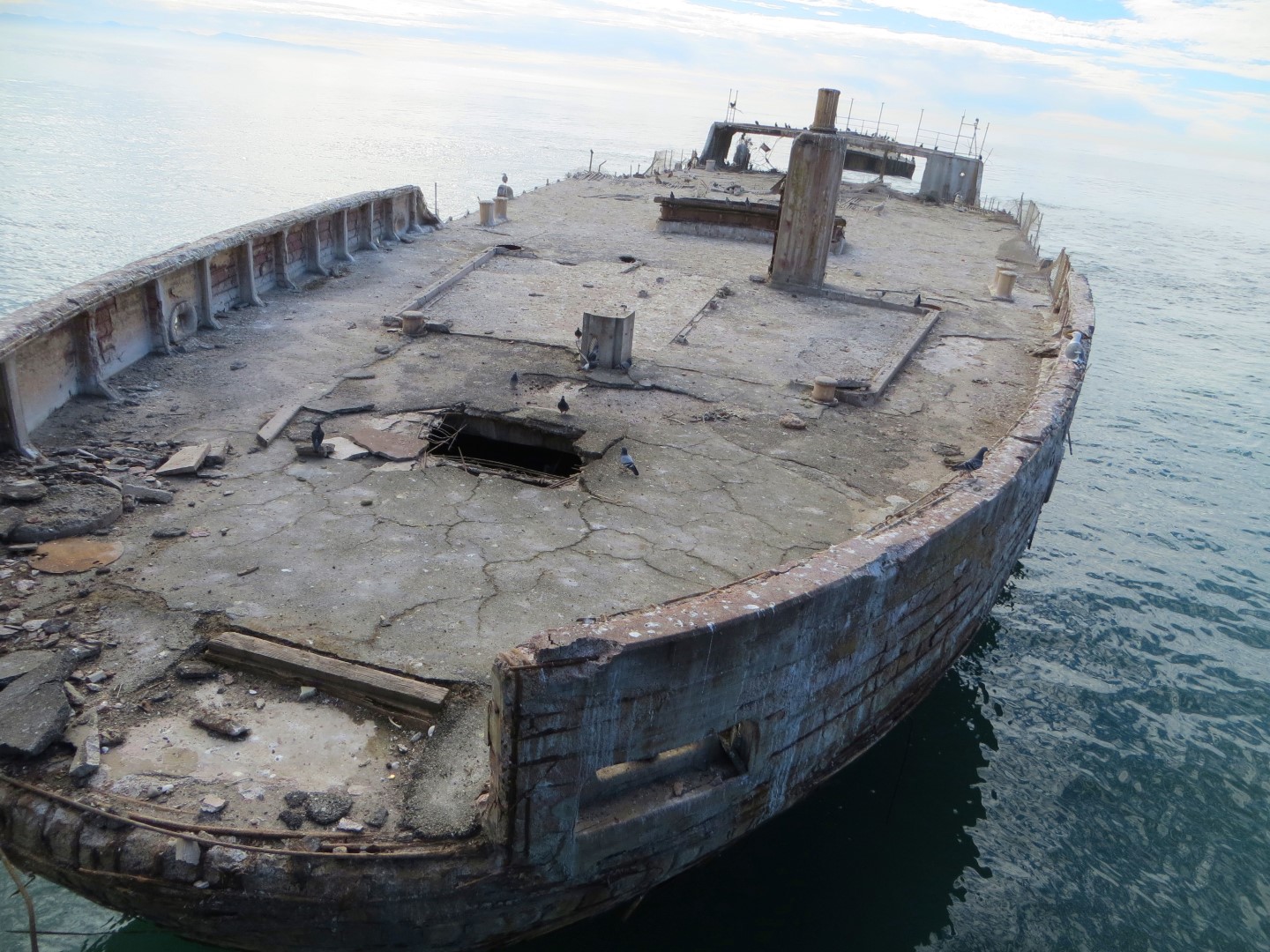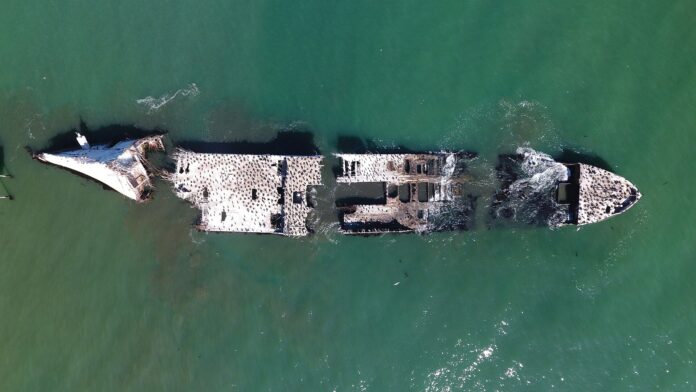
Launched on May 29, 1919, by the San Francisco Shipbuilding Company in Oakland, California, the SS Palo Alto was an experimental Design 1100 concrete oil tanker constructed for the United States Shipping Board Emergency Fleet Corporation during World War I. Built using reinforced Portland cement due to wartime steel shortages, the 435-foot, 6,144-gross-ton vessel completed trials but saw no active military duty before the November 1918 armistice rendered her operational profile obsolete.
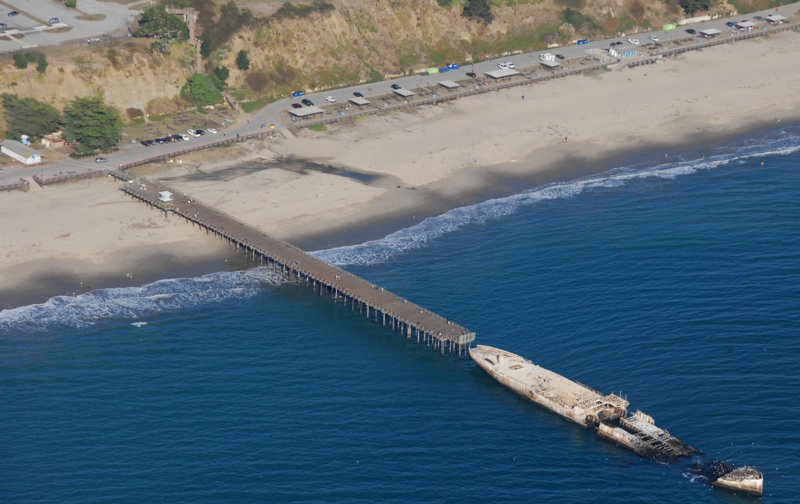
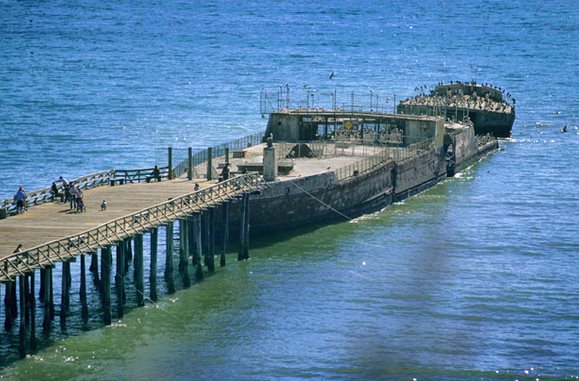
Following a decade laid up in San Francisco Bay, the tanker was acquired in 1929 by the Seacliff Amusement Company of Nevada. In early 1930, she was towed to Seacliff State Beach in Aptos, California, intentionally grounded in shallow water, and connected to land via a 630-foot wooden pier to function as an entertainment hub featuring a ballroom, heated pool, restaurant, and casino floor.
1. Tactical & Technical Profile
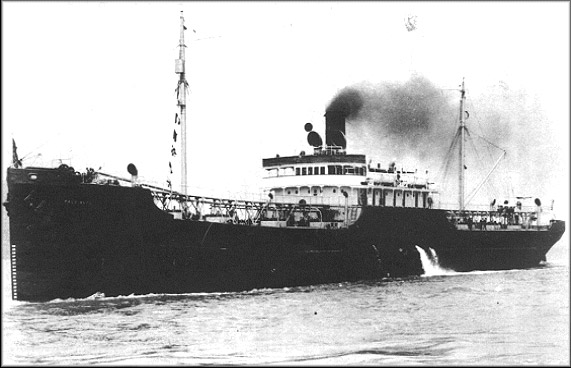
- Ship Name / Designation: SS Palo Alto (“The Cement Boat”)
- Vessel Class / Type: Peralta-class Concrete Oil Tanker (Design 1100)
- Builder: San Francisco Shipbuilding Company, Oakland, California
- Launch Date: May 29, 1919
- Displacement / Tonnage: ~7,500 tons deadweight | 6,144 Gross Register Tons (GRT)
- Dimensions: Length: 435 ft (132.6 m) | Beam: 54 ft (16.5 m)
- Propulsion: 3-cylinder Triple Expansion Steam Engine (359 NHP, Llewellyn Iron Works)
- Primary Material: Reinforced concrete (Santa Cruz Portland Cement aggregate mix)
- Scuttling / Grounding Date: January 1930
- Location: Seacliff State Beach, Aptos, Monterey Bay, California (Coordinates: 36.9696° N, 121.9136° W)
- Current Status: Severely fractured, partially submerged artificial reef and protected seabird habitat
2. Historical Sequence & Operational Transformation
[1919 WWI Concrete Tanker Launch] ──► [1920s Laid-Up Reserve Fleet] ──► [1929 Seacliff Amusement Co. Acquisition] ──► [1930 Grounding & Rainbow Ballroom Launch] ──► [1932 Great Depression Insolvency & Storm Fracture] ──► [1936 State Acquisition & Public Fishing Pier] ──► [2017–2023 Structural Collapse & Ecological Transition]- WWI Concrete Emergency Fleet: Faced with acute wartime steel allocation deficits, the U.S. Emergency Fleet Corporation authorized the construction of reinforced concrete ships. Palo Alto and her sister ship, SS Peralta, were engineered using a special lightweight aggregate cement mix produced in nearby Davenport, California.
- The “Rainbow Ballroom” Era: In January 1930, the vessel was towed to Aptos, flooded at the stern, and permanently grounded. The Seacliff Amusement Company fitted her out with the 54×154-foot “Rainbow Ballroom,” a heated seawater swimming pool, a cafe, carnival arcades, and slot machine gambling halls.
- Economic Failure & Structural Breakdown: The onset of the Great Depression doomed the commercial venture, forcing the company into bankruptcy by 1932. Shortly thereafter, a winter storm fractured the concrete hull amidships. Stripped of interior fittings and metal superstructure, the ship was sold to the State of California in 1936 for one dollar to serve as a public fishing pier.
- Environmental & Storm Impact: Decades of exposure to ocean swells, salt saturation, and major winter storms (including severe El Niño events in 2016–2017 and 2023) broke the hull into multiple sections and destroyed sections of the connecting pier. The vessel’s interior was de-oiled by state environmental agencies in 2006 to protect local marine life.
3. Structural & Engineering Profile
| Parameter | Technical Details |
| Structural Composition: | 1 part Portland cement, 2 parts aggregate (1/3 sand, 2/3 gravel), 1 part water over steel rebar grid |
| Failure Mechanics: | Tensile cracking along the midsection hull caused by continuous wave action and ground swell torque on a rigid, unyielding concrete frame |
| Access History: | Boarding banned in 2001; pier access progressively set back before historic 2023 storms compromised the wooden pier infrastructure |
| Ecological Function: | Serves as an established marine refuge for pelicans, cormorants, sea lions, rockfish, and harbor seals |