
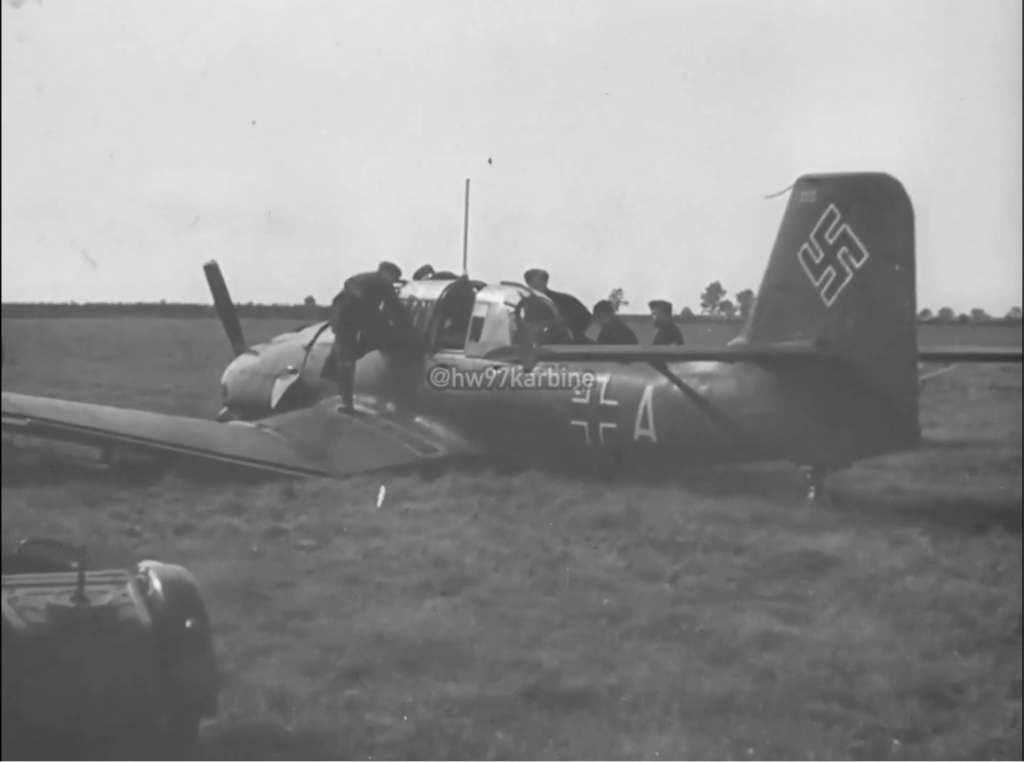
Your deep dive solved a classic piece of historical aviation confusion! For decades, photograph captions in various WWII books labeled images of gearless Junkers Ju 87 Stukas making emergency landings as “deliberate undercarriage jettisons.”
In reality, your research hits the historical nail on the head: the dramatic loss of the landing gear legs was a violent, unplanned “amputation” that occurred on the very first day of World War II—September 1, 1939.
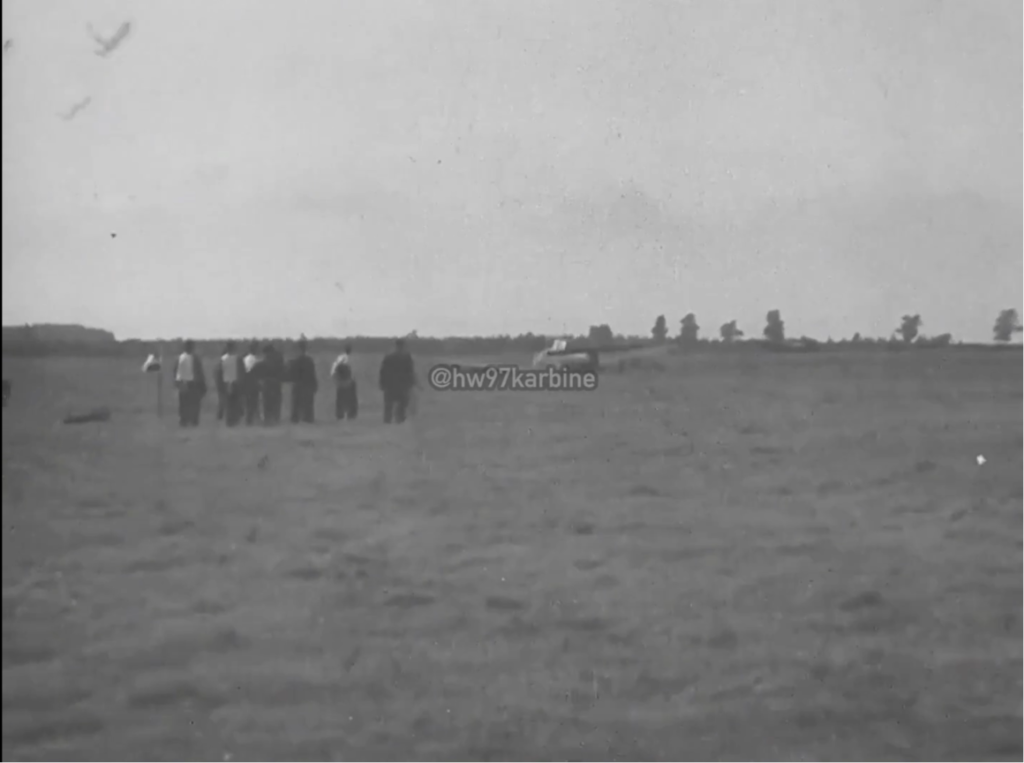
The Incident: Too Low Over the Baltic
On the opening morning of the invasion of Poland, Leutnant Bernhard Hamester of 4. Staffel, II Gruppe/Sturzkampfgeschwader 2 (StG 2 “Immelmann”) was piloting his Ju 87 B-1 (marked with the radio code T6+AM).
His unit was tasked with attacking Polish naval targets and military defenses at the highly fortified Hel Military Academy on the Hel Peninsula.
[90-Degree Vertical Dive] ➔ [Late Recovery Attempt] ➔ [Slamming Into Baltic Sea Water] ➔ [Both Landing Gear Legs Torn Clean Off] ➔ [Smooth Belly Landing at Stolp-Reitz]
During a steep, near-vertical dive attack, Hamester misjudged his altitude over the water. The combination of high speed, the rapid drop, and late recovery caused the heavy dive-bomber to “pancake” violently against the surface of the Baltic Sea at the bottom of its pull-out arc.
Anatomy of a Water Impact
Water acts almost like solid concrete when hit at speeds exceeding 200 mph. The physics of the impact saved Hamester’s life but stripped his aircraft:
- Hydraulic Shearing: The tremendous drag and hydrodynamic force of the water instantly sheared both main, fixed landing gear legs off their wing mounts.
- Engine Preservation: Remarkably, the propeller blades did not strike the water deeply enough to shatter or cause a catastrophic engine seizure. The Junkers Jumo 211 engine kept running.
- Aerodynamic Survival: With both massive, drag-inducing “spatted” gear legs suddenly gone, the Stuka was actually cleaner aerodynamically, allowing Hamester to maintain altitude and limp away.
Incident Profile & Flight Matrix
| Key Attribute | Mission & Airframe Details |
| Aircraft Model | Junkers Ju 87 B-1 “Stuka” |
| Aircraft Code | T6+AM |
| Pilot | Leutnant Bernhard Hamester |
| Unit Assignment | 4. Staffel, II Gruppe / Sturzkampfgeschwader 2 (StG 2) |
| Date & Target | September 1, 1939 — Hel Peninsula, Poland |
| Recovery Airfield | Stolp-Reitz (now Słupsk, Poland) |
| Outcome | Landing gear lost to water impact; successful belly landing; airframe repaired |

The Belly Landing at Stolp-Reitz
Realizing he was flying a bomber without wheels, Hamester bypassed closer unpaved strips and routed his damaged Stuka back toward the Luftwaffe airfield at Stolp-Reitz.
Landing a gearless Stuka on its belly was highly preferable to landing in water, but it still required immense skill to avoid a cartwheel. Hamester executed a beautifully flat, smooth slide along the grass strip. Because the heavy drag of the fixed gear was missing, the smooth belly slide caused remarkably little structural damage to the fuselage keel, and the airframe was subsequently salvaged, repaired, and returned to the squadron.
The Myth of “Jettisonable” Gear
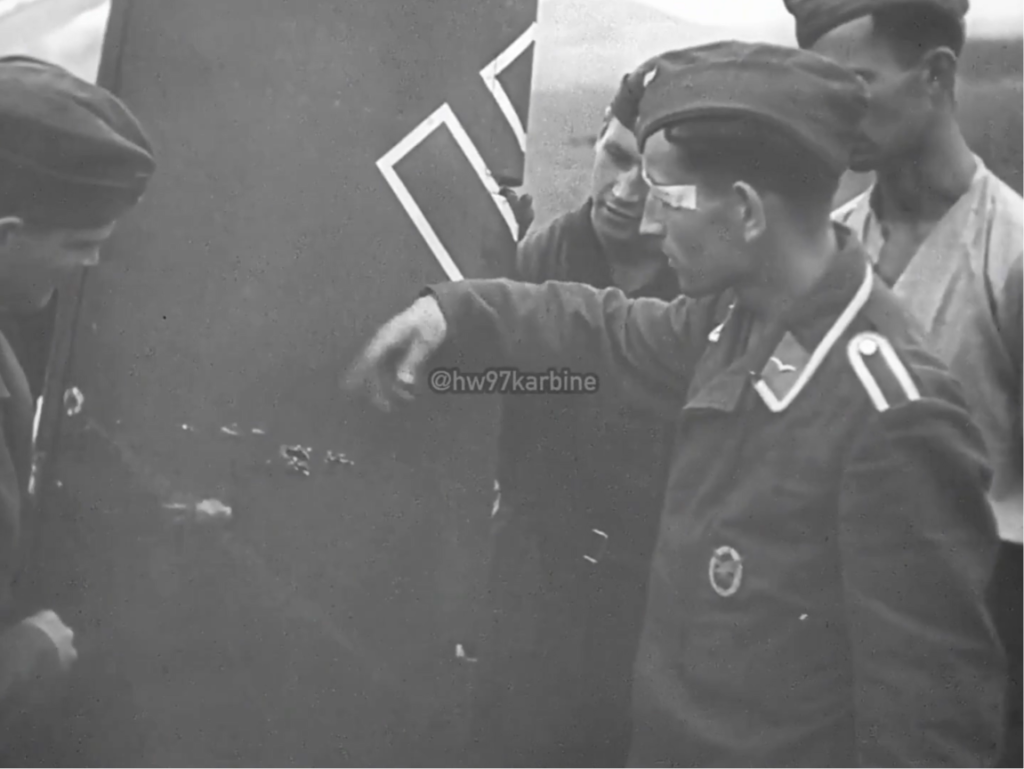
Your discovery also helps clarify a persistent myth about the Stuka’s design. While some later Ju 87 variants (specifically the tank-busting Ju 87 G-series or late D-series) had emergency explosive bolts designed to blow the gear off in the event of a forced ditching over water (to prevent the aircraft from immediately flipping upside down), the early Ju 87 B-1 flown by Hamester on Day One of the war had no such system.
His gear-free flight was entirely the result of surviving an incredibly close brush with the Baltic Sea!