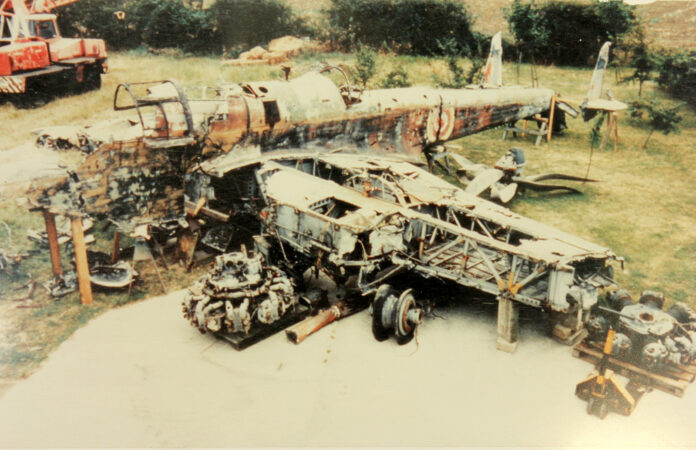
The Handley Page Hampden remains one of the most visually distinctive British aircraft of the early Second World War. Affectionately known by crews as the “Flying Suitcase” due to its unusually narrow, cramped fuselage, the twin-engine medium bomber bore the brunt of Bomber Command’s early daylight offensives. Among the 1,430 models built, a single airframe—serial number P1344—stands out for an extraordinary operational lifespan that progressed from routine training to front-line maritime operations, culminating in a fateful, tragic mission to the frozen Russian Arctic.
Today, it exists as one of only three surviving Hampdens in the world, serving as a poignant monument to the sacrifices of wartime crews.
1. From Training Wings to Maritime Strike
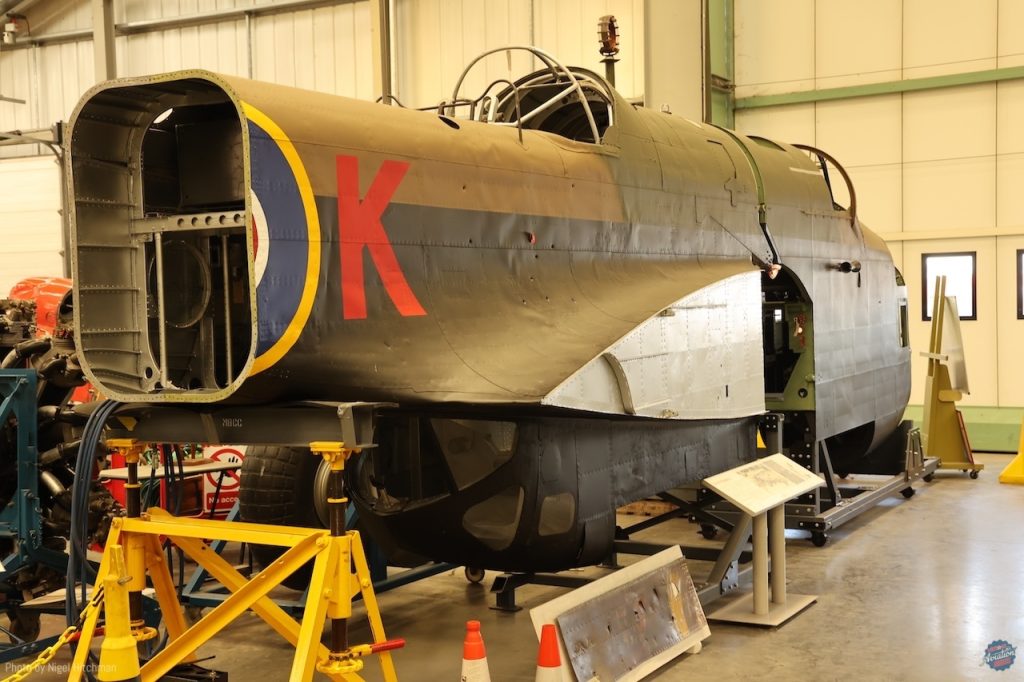
Manufactured as a standard medium bomber, P1344 entered service with the Royal Air Force (RAF) in late December 1939. Its military career began far from the front lines with No. 14 Operational Training Unit (OTU), where it was utilized to train fresh aircrews needed for Bomber Command’s early air offensive over occupied Europe.
However, as the air war intensified, standard Hampdens suffered heavy losses during daylight raids over Germany due to inadequate defensive armament. Recognizing the aircraft’s agility, the RAF repurposed the type. P1344 was sent back to the Handley Page factory to undergo a major conversion into a TB Mk. I Torpedo Bomber. Modified to carry an 18-inch torpedo underneath its slender fuselage, the aircraft was reassigned to No. 144 Squadron under RAF Coastal Command, operating from RAF Leuchars on the east coast of Scotland. From this base, the crew flew hazardous anti-shipping sweep missions over the North Sea, hunting enemy German convoys and warships.
2. Mission to the Arctic: The Fatal Ferry Flight
By September 1942, Nazi Germany’s surface warships and U-boats were decimating Allied supply lines in the north. To safeguard the critical Arctic Convoy PQ 18, the RAF ordered 32 Hampden torpedo bombers from Nos. 144 and 455 Squadrons to temporarily relocate to the northern USSR.
On September 4, 1942, P1344 departed from Sumburgh in the Shetland Islands. It was an arduous, long-range transit flight over occupied Scandinavia toward the Kola Peninsula near Murmansk. To support the outbound trip, P1344 packed a fifth crew member into its narrow cabin: ground technician Corporal George Shepherd, whose vital role would be to refuel and re-arm the aircraft upon landing in Russia.
3. Ambush in the Clouds
En route, the heavily laden bomber encountered severe atmospheric icing. The massive ice buildup weighed down the aircraft, preventing it from climbing high enough to safely cross the mountainous terrain directly ahead. Forced to alter their course to navigate around the high peaks, the crew inadvertently flew dangerously close to a German Luftwaffe airfield near Petsamo.
The low-flying, sluggish bomber was immediately met with intense ground fire and intercepted by two Messerschmitt Bf 109 fighters. Riddle with bullets, P1344 crash-landed in a remote, boggy forest on the Kola Peninsula.
The engagement took a heavy toll on the five-man crew:
- Sgt. Robertson and Sgt. Garrity were killed in action during the aerial battle.
- Sgt. Miller survived the initial air battle but tragically succumbed to his injuries during the crash landing.
- Pilot Officer Perry and Corporal Shepherd survived the ordeal but were promptly captured, spending the remainder of the war as prisoners of war (POWs).
While the remaining flyable Hampdens of No. 144 Squadron successfully reached Russia and were later handed over to the Soviet Naval Air Force, P1344 lay frozen, hidden, and undisturbed in the Russian wilderness for the next 49 years.
4. Resurrection: From the Siberian Bog to the RAF Museum
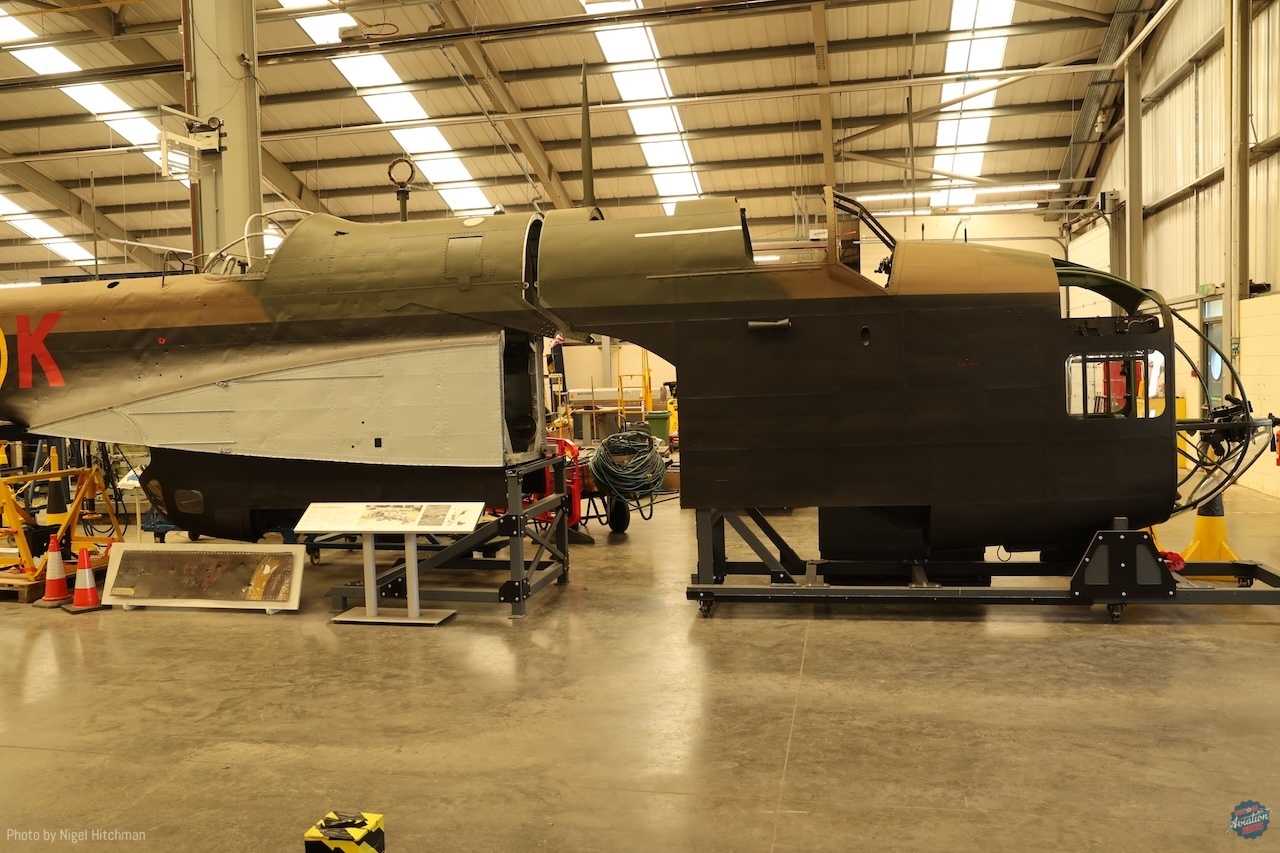
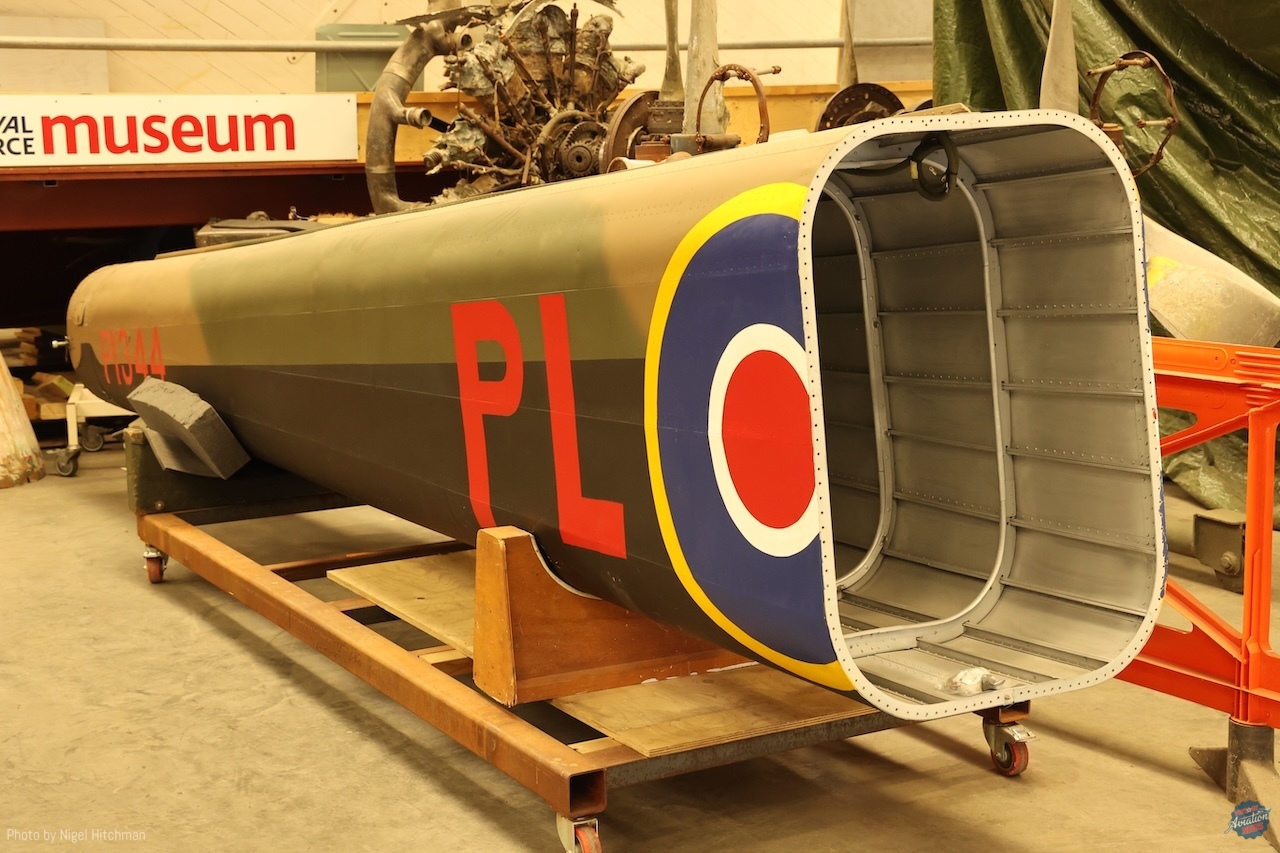
In 1991, the wreckage of P1344 was finally discovered and recovered from the Kola Peninsula. The Royal Air Force Museum officially acquired the airframe in 1992, initiating one of the most extensive and painstaking aviation conservation projects in British history.
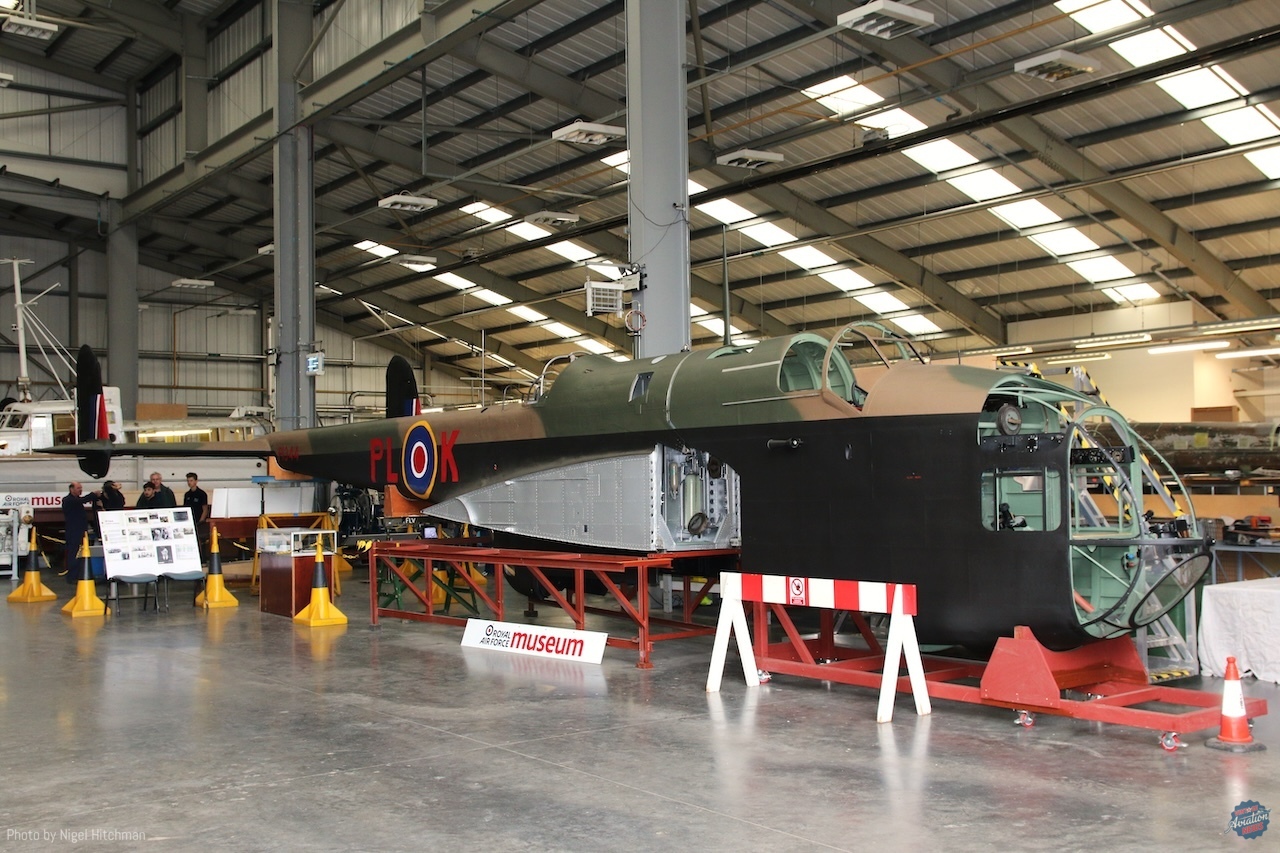
[1942: Shot Down] ──> [1991: Recovered] ──> [2014: Intensive Restoration] ──> [2025/2026: Public Display]For over a decade, technicians and volunteers at the Michael Beetham Conservation Centre at RAF Museum Midlands (Cosford) worked tirelessly to rebuild the bomber. Utilizing original 1930s engineering drawings, the team completely reassembled the fuselage—retaining a significant amount of the original structure alongside newly remanufactured parts.
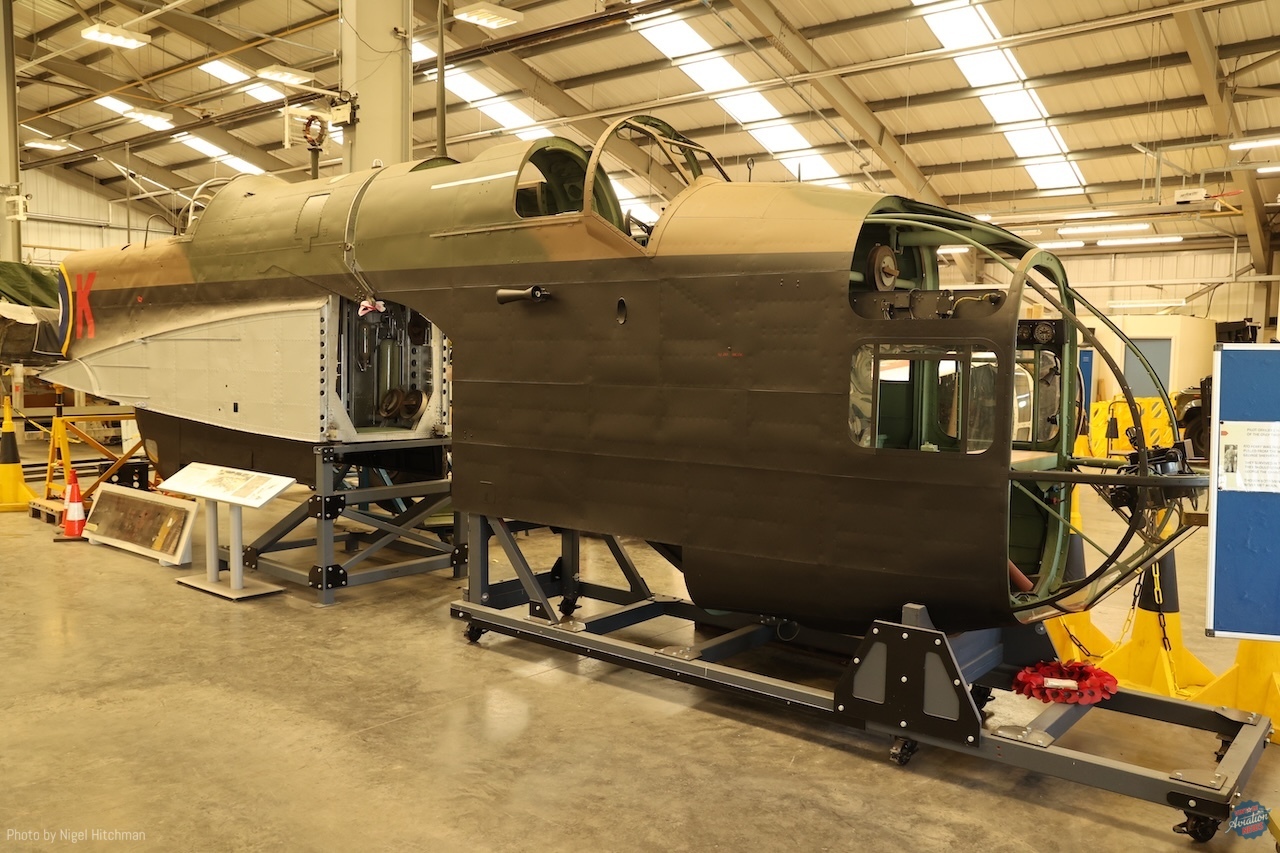
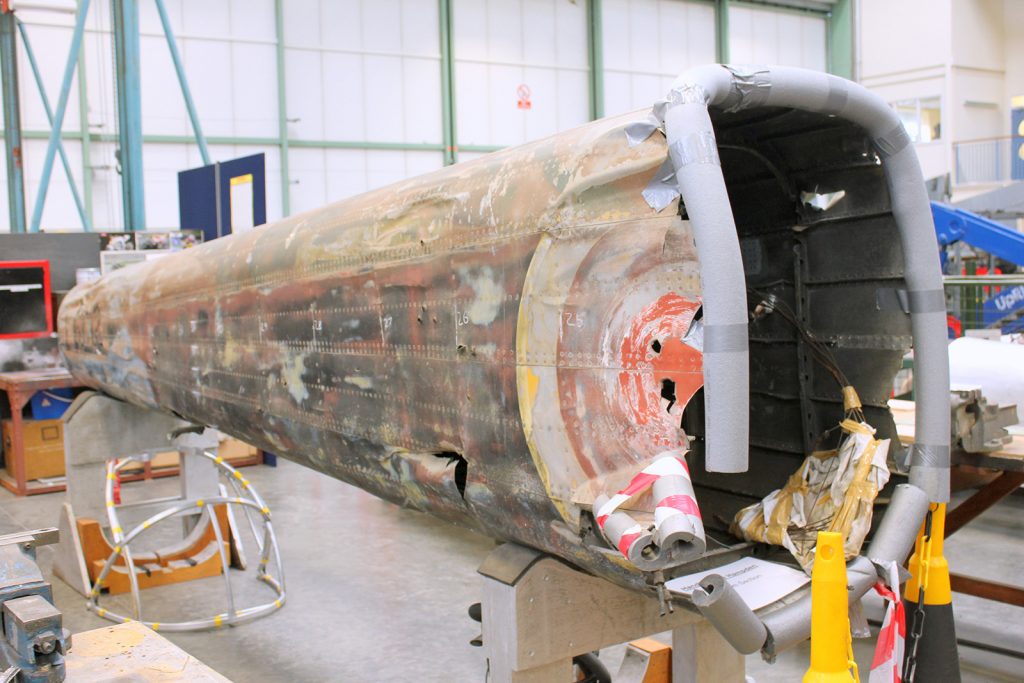
In a powerful tribute to the fallen crew, conservators deliberately left visible bullet holes and shrapnel scars from the Messerschmitt attack on the starboard side of the fuselage. A remembrance poppy is historically placed in one of these battle scars.
In July 2025, the reconstructed fuselage of P1344 made its historic journey to the RAF Museum London (Hendon), where it went on public display for the very first time. Today, the “Flying Suitcase” stands proudly in the museum’s historic hangars, no longer a forgotten relic of the Arctic, but a living testament to the grit, peril, and ultimate sacrifice of World War II aircrews.