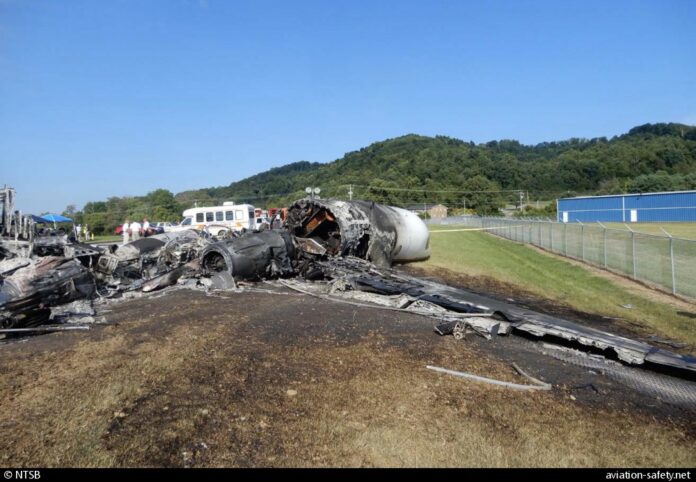
On August 15, 2019, at 15:37 Eastern Daylight Time (EDT), a Cessna 680A Citation Latitude business jet (registration N8JR, MSN 680A-0010), operated by JRM Air LLC, suffered a violent runway excursion, landing gear failure, and post-impact fire during landing at Elizabethton Municipal Airport (0A9) in Elizabethton, Tennessee.
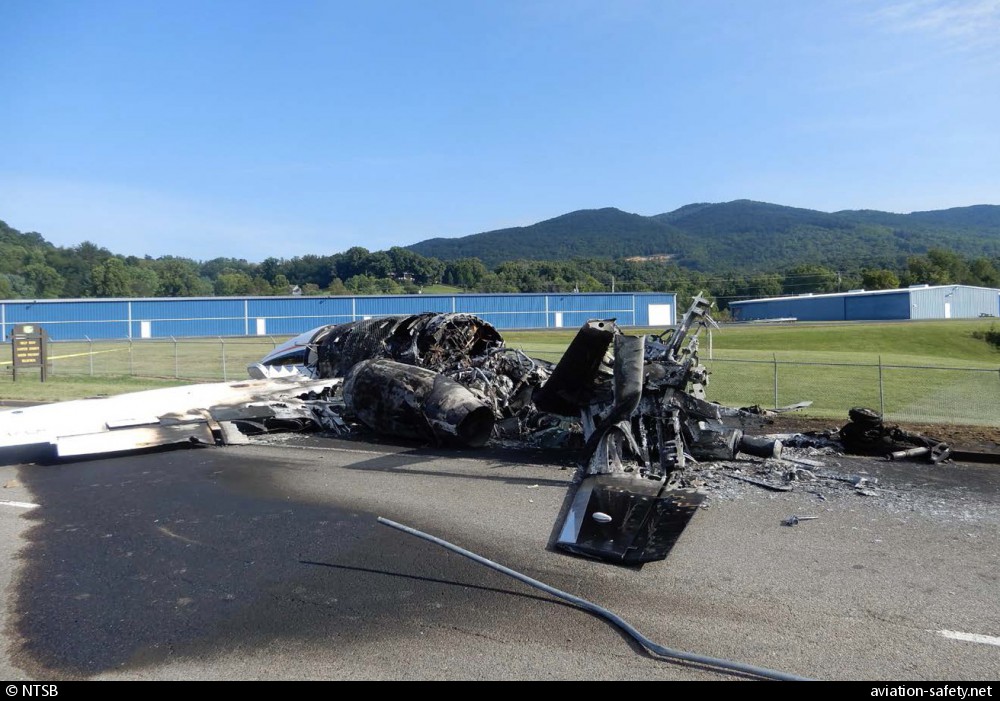
The aircraft was carrying two flight crew members and three high-profile passengers—former NASCAR driver Dale Earnhardt Jr., his wife Amy, and their 15-month-old daughter. After an unstabilized approach resulted in four severe runway bounces, the pilot attempted an aborted landing (go-around). However, because the thrust reversers had unlocked during ground contact, the Full Authority Digital Engine Control (FADEC) system automatically inhibited engine power, rendering a go-around impossible. The aircraft overran the runway, crashed through a perimeter fence, and came to rest on the embankment of Tennessee Highway 91 before being completely destroyed by fire. All five occupants evacuated safely with minor injuries.
1. Tactical Incident Breakdown
- Date & Local Time: August 15, 2019 | 15:37 EDT
- Location: Elizabethton Municipal Airport (0A9), Elizabethton, Carter County, Tennessee, USA
- Aircraft Model: Cessna 680A Citation Latitude
- Civil Registration: N8JR
- Manufacturer Serial Number (MSN): 680A-0010 (Year of Manufacture: 2015)
- Operator: JRM Air LLC (Part 91 Business Flight)
- Flight Phase: Landing Flare / Bounced Touchdown Rollout
- Flight Route: Statesville Regional Airport (SVH), NC ──► Elizabethton Municipal Airport (0A9), TN
- Occupants: 5 Onboard (2 Flight Crew | 3 Passengers, including Dale Earnhardt Jr.)
- Casualties: 0 Fatalities | 3 Minor Passenger Injuries | 2 Uninjured Crew
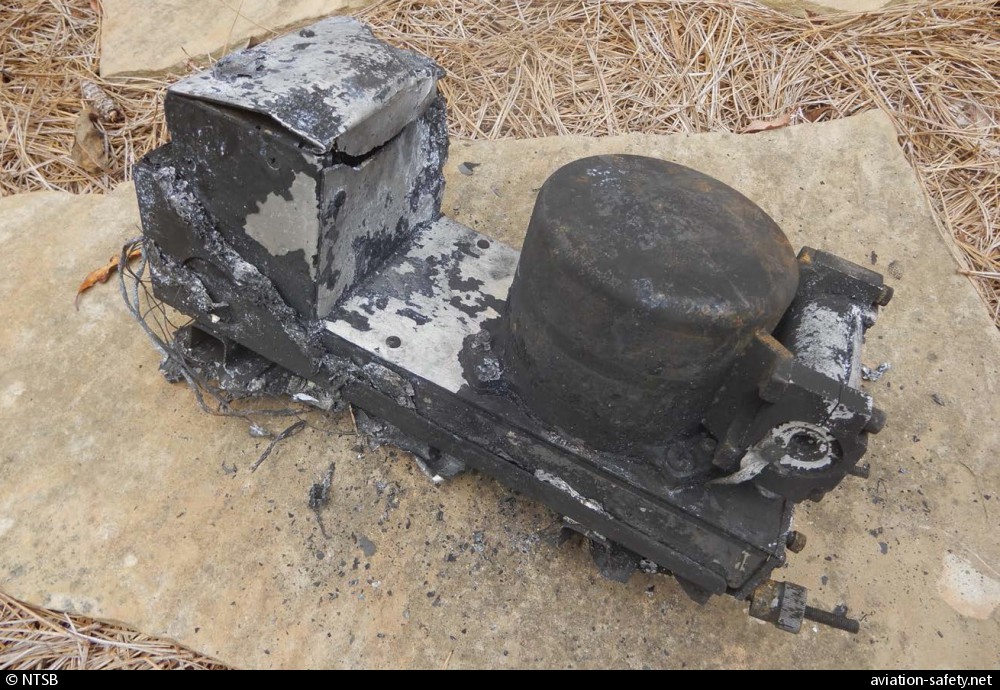
- Airframe Status: Total Loss (Destroyed by runway excursion impact forces and post-crash fire)
- Airframe Total Time: 1,165 Hours
- Investigating Authority: National Transportation Safety Board (NTSB) — Report ID:
ERA19FA248
2. Sequence of Events & System Lockout Dynamics

[Unstabilized Approach at 126 kts / 1,500 fpm] ──► [Touchdown 1 & Early T/R Command] ──► [Multiple Bounces & Air-Ground Sensor Logic Confusion] ──► [Hydraulic Cut to Unlocked T/Rs] ──► [FADEC Inhibit Blocks Go-Around Power] ──► [Touchdown 4, Gear Collapse & Highway Excursion]- Excessive Speed & Descent Rate: Approaching Runway 24 (a 5,001 ft asphalt strip), the crew allowed the airspeed to reach 126 knots—18 knots above the calculated reference speed ($V_{ref}$ of 108 knots). Five seconds prior to touchdown, the sink rate reached 1,500 feet per minute (fpm), far exceeding the maximum allowable 600 fpm limit.
- Improper Checklist Execution: Upon initial touchdown 240 feet past the displaced threshold, the pilot failed to deploy the speedbrakes as dictated by the landing checklist. Instead, the pilot immediately commanded thrust reverser deployment.
- Bounced Landings & Air-Ground Logic:
- Touchdown 1 (1.4g): Reversers were commanded 0.4 seconds after touchdown, but the aircraft bounced back airborne after 0.6 seconds before the deployment cycle could complete.
- Touchdown 2 (1.6g): Bounced immediately off nose and right gear.
- Touchdown 3 (1.7g): Touched down 1,000 feet down the runway. Because the reverser command from Touchdown 1 was still active, the thrust reverser doors unlocked. The pilot advanced throttles to idle to stow them, but the airframe bounced airborne again.
- Hydraulic Lockout & Aerodynamic Deployment: When the landing gear squat switches registered “in-air” status while the reversers were unlocked, system safety logic automatically cut hydraulic power to the reverser actuators to prevent airborne deployment. Deprived of hydraulic pressure, aerodynamic slipstream forces pulled the unlocked reverser sleeves fully open in mid-air.
- FADEC Power Denied: Realizing the aircraft was floating down the runway with only 1,100 feet remaining, the pilot advanced the throttles to maximum takeoff power to initiate a go-around. However, engine FADEC logic detected the deployed thrust reversers and locked engine output at idle to protect the airframe.
- Final Impact & Fire: The aircraft stalled and slammed onto the runway a fourth time at a severe 3.4g load. The right main landing gear collapsed, and the jet skidded off the paved overrun, plunged down an embankment, broke through a chain-link fence, and came to rest on the edge of Tennessee Highway 91, where a fierce post-accident fire broke out.
3. NTSB Probable Cause & Findings
| Parameter | Details |
| Primary Probable Cause | The pilot’s continuation of an unstabilized approach despite recognizing associated cues, and the flight crew’s decision not to initiate a go-around before touchdown, resulting in a bounced landing, loss of control, gear collapse, and runway excursion. |
| Contributing Factors | • Failure of the pilot to deploy speedbrakes upon initial touchdown. • The pilot’s attempt to execute a go-around after deployment of thrust reversers (violating AFM touch-and-go/go-around protocols). |
| Survival Factors | The cabin main entry door was jammed externally against the ground, and a chain-link fence post had impaled the emergency escape hatch. The copilot eventually forced the main door open sufficiently for all 5 occupants to escape seconds before flames engulfed the cabin. |
| Safety Recommendation Context | The NTSB highlighted the absence of a designated Committed-to-Stop (CTS) point in training and manuals, which contributed to the crew attempting an impossible go-around late in the landing roll after thrust reverser initiation. |