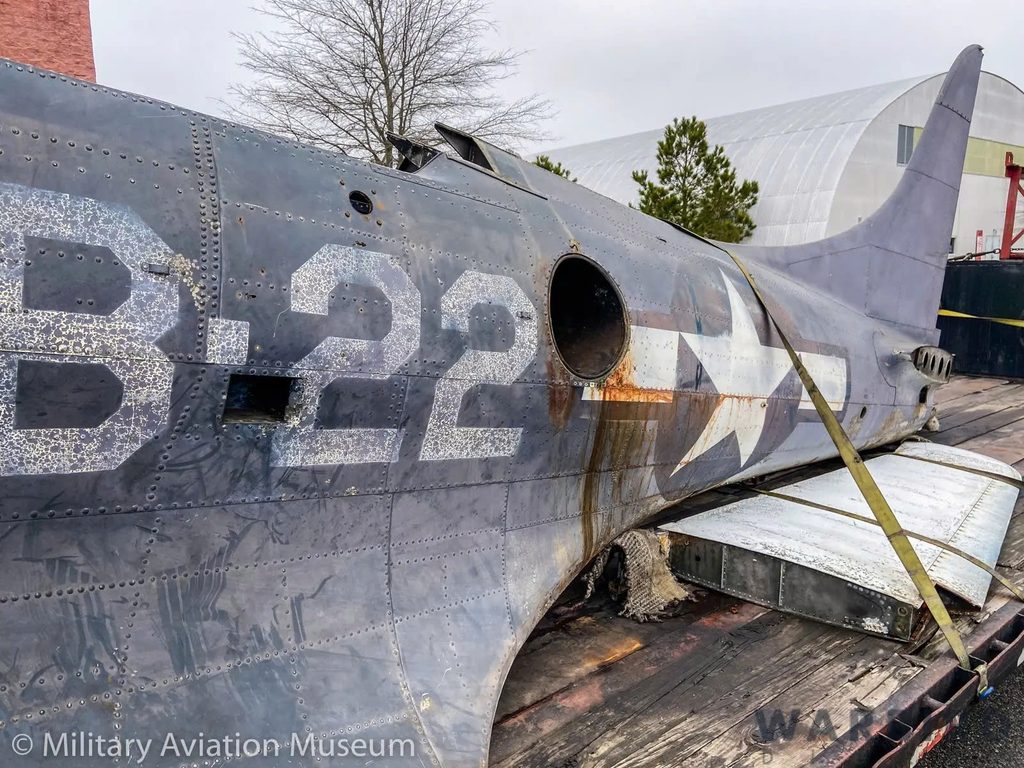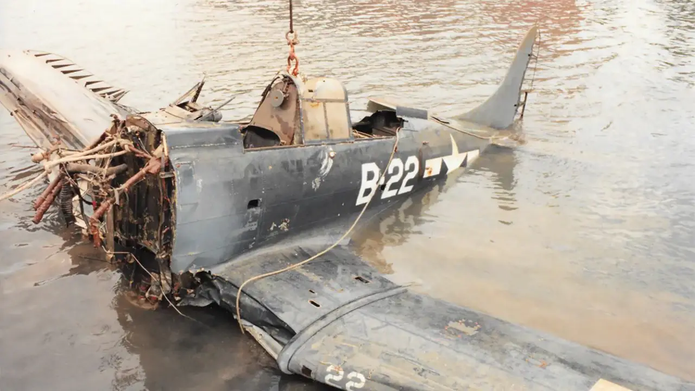
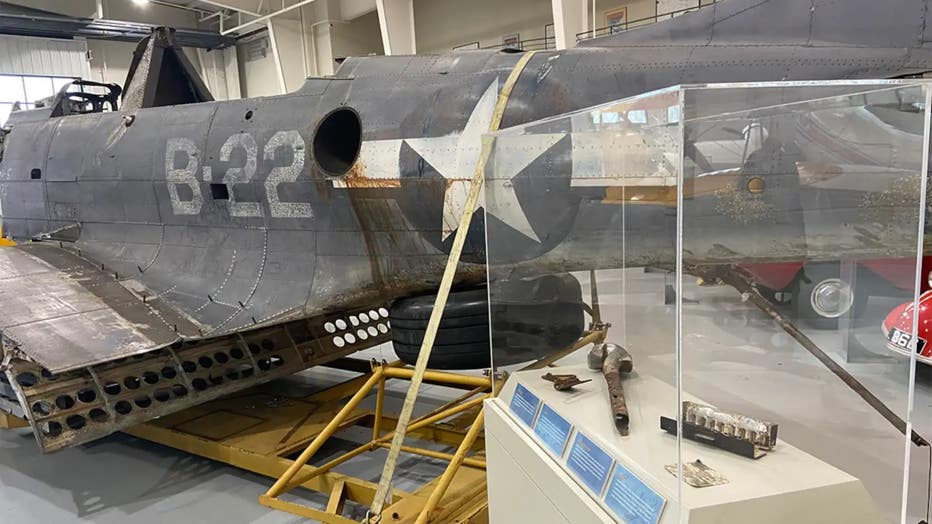
A World War II Douglas SBD-5 Dauntless dive bomber—which spent 50 years resting on the bottom of Lake Michigan after a training accident—was put on public display at Virginia Beach’s Military Aviation Museum ahead of a rare restoration project aimed at making the vintage aircraft fully flyable once again.
1. Tactical Incident & Recovery Breakdown

- Aircraft Model: Douglas SBD-5 Dauntless
- Pilot: Lt. Charles L. Ford III (Survived the crash with two severe forehead cuts)
- Location: Lake Michigan (Training carrier deck approach onto the training vessel USS Wolverine)
- Condition upon Recovery: Preserved with original paint, manufacturer data plate, original tail hook, and the pilot’s seat belt buckle still inside.
- Salvage & Transfer: Recovered by a community of recreational divers and aircraft salvage company A and T Recovery; initially stored in Pensacola, Florida, before being transferred to the Military Aviation Museum in Virginia Beach, Virginia in mid-February.
2. Historical Background & Training Operations
- Great Lakes Carrier Training: Because German and Japanese submarines posed a major threat along U.S. coastal waters, the U.S. Navy converted two former Great Lakes cruise ships—named the USS Wolverine and USS Sable—into inland training aircraft carriers by removing their luxury accommodations. These vessels qualified thousands of naval aviators during World War II.
- The SBD Dauntless Legacy: SBD Dauntless planes are world-famous for their tide-turning performance at the Battle of Midway, where they destroyed four Japanese aircraft carriers in a single day. The aircraft was one of the U.S. Navy’s most capable frontline aircraft when the war broke out in 1941.
- The Accident: While attempting to land on the training carrier USS Wolverine, the aircraft crashed under the control of Lt. Charles L. Ford III. Despite the training accident, research indicates Ford eventually qualified to land on an aircraft carrier.
3. Museum Exhibit & Restoration Outlook
- As-Recovered Display: The museum exhibited the aircraft largely in its as-recovered condition with original paint, a removed panel allowing visitors to view the internal metal condition, the original tail hook, and the pilot’s seat belt buckle alongside video footage of the plane resting on the lake bottom.
- Restoration Goals: While many SBD Dauntless aircraft have been recovered and statically restored for traditional museum exhibits, the Virginia Beach team’s rare objective is to make the aircraft flyable once again.