
Wednesday is one of the best iterations of the amateur sleuth format in recent years. It manages to craft intriguing narratives that feature sinister and seemingly deadly antagonists. Often, Wednesday’s (Jenna Ortega) visions show that the students of Nevermore are in danger, and the level of tension created adds a sense of urgency to these ever-unfolding mysteries. The layers of each investigation, which usually delve into the rich history of the school, only serve to heighten the show’s extensive lore and the atmosphere created.
However, despite all this buildup and mystery, Wednesday keeps making the same crucial error. Since Season 1, the show has made its villains far too disposable, and, consequently, future threats just don’t replicate that apprehension. This is painfully apparent in the way the show disregarded the Avian, who was initially portrayed as Season 2’s big bad. The consequence of this carelessness is a lack of fluidity between episodes and genuine dynamism for every potentially villainous character shown. Wednesday manages to get a high caliber of guest stars to portray these antagonistic roles, but the show is continually wasting them.
Killing Off The Avian Made No Sense in ‘Wednesday’
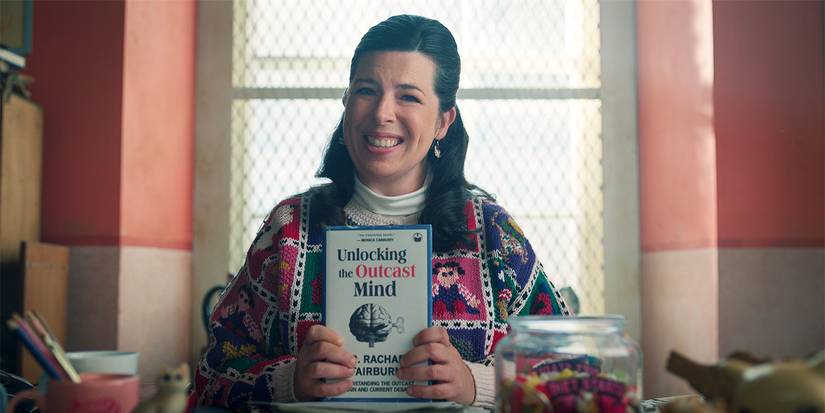
The Avian’s death is the most illogical thing Wednesday has ever made. The character was the main antagonist of the first half of the second season, and was shown to be a huge threat with considerable scientific prowess and the ability to manipulate others. To have such a large threat that apparently could only be defeated by shutting off the power of a whole medical facility, be unceremoniously killed off-screen, undermines all the thorough characterization the show put in. It is evident that Wednesday wanted to move towards Isaac’s story, but the decision to write off the previous villain without any true acknowledgment is a huge waste of potential that could’ve been easily solved by having her at large for the second half of the season.
Not only does this plot point completely waste the talent of horror icon Heather Matarazzo, but it also makes the entire first half of the season feel limp and trivial. The Avian was portrayed as an unstoppable force in Wednesday’s vision, but now the show has damaged the reputation and threat level of the character, making it nearly impossible for it to be brought back with any real weight. Similarly, in killing off the Avian, the show abandoned the whole experimentation plot line. This aspect of the show had so much potential, being able to explore the testing of outcasts and the ethical ramifications or dangerous usage of the process. It is clear from Judi becoming an Avian that the experiments are successful, but the show halted that narrative before it could be sufficiently investigated. The first act of Season 2 had such a huge climax, but in retrospect, after Judi’s death, it feels unrelated and illogical.
Wednesday Is Too Powerful, and the Villains Are Too Weak

Judi’s death is a sign of a much bigger problem for Wednesday, as the show is stuck in a hamster wheel of villains that are too easy to defeat and dispose of. Although there has to be an element of tractability due to the teen audience of the show, this way of composing antagonists for Wednesday feels belittling to both its protagonist and its audience. With this, Wednesday never truly feels at risk, and the extent of her abilities, both in a supernatural and deductive sense, feels false and exaggerated.
The finale of the first season showed signs of a stalker who hacked into Wednesday’s phone, which was a huge breach of privacy and posed an omniscient threat. However, this was inflated purely to leave the first season on a cliffhanger. The threat turned out to be Agnes (Evie Templeton), who quickly became a confidant for Wednesday and never intended to cause any harm. It is these small moments that lessen the impact of the high-stakes dangers. Similarly, the cold open of this season implied that Wednesday took down a serial killer for fun without any real struggle. This heightens two major issues: the first is that there are too many micro-threats, and the second is that Wednesday is never feels fazed by these threats, which consequently means the audience never feels any true sense of peril.
‘Wednesday’ Has No True Stakes Anymore
The issues with these smaller threats bleed into every form of danger within the show. Thandiwe Newton is brought in for barely any episodes, and is supposed to evoke a threatening aura that points to her being the villain of the season. Although Newton’s performance as Dr. Fairburn is stern and sinister, she is killed off before that arc is allowed to fully bloom.
However, it is the clear ulterior motives of Principal Dort (Steve Buscemi) that are painfully underdeveloped. He was single-handedly responsible for the conceptualization of Morning Song, a cult that uses the power of siren song to manipulate its members. It is clear he has an extremely dangerous level of charisma and influence, as well as a fascinating backstory that is only afforded one scene in the entire show. The idea of his character could easily be the main antagonist of the season, but instead, he is confined to the grounds of Nevermore and given fleeting cameos. Additionally, any interesting storylines surrounding Morning Song are seemingly crushed with Principal Dort.
It is clear that Wednesday is struggling to fully realize its villains by having too many each season and racing to defeat them all. Each one isn’t fleshed out with careful consideration, which makes them seem unintelligent and disposable. This calls into question how they even orchestrated their grand plans in the first place and deprives any subsequent antagonist of any credible motive or stakes, as it is evident that they won’t last long.
Although killing off Marilyn Thornhill (Christina Ricci) showed a real vigor and lack of reliance on nostalgia, the show has evidence that this death was just the first in a long line of meaningless villain demises. Wednesday is at serious risk of oversimplifying its antagonists, making them feel overwhelmingly docile and leaving the show with no true stakes or threat for the main cast. It stunts the show’s growth and leaves it with little room to create any form of tension going forward.